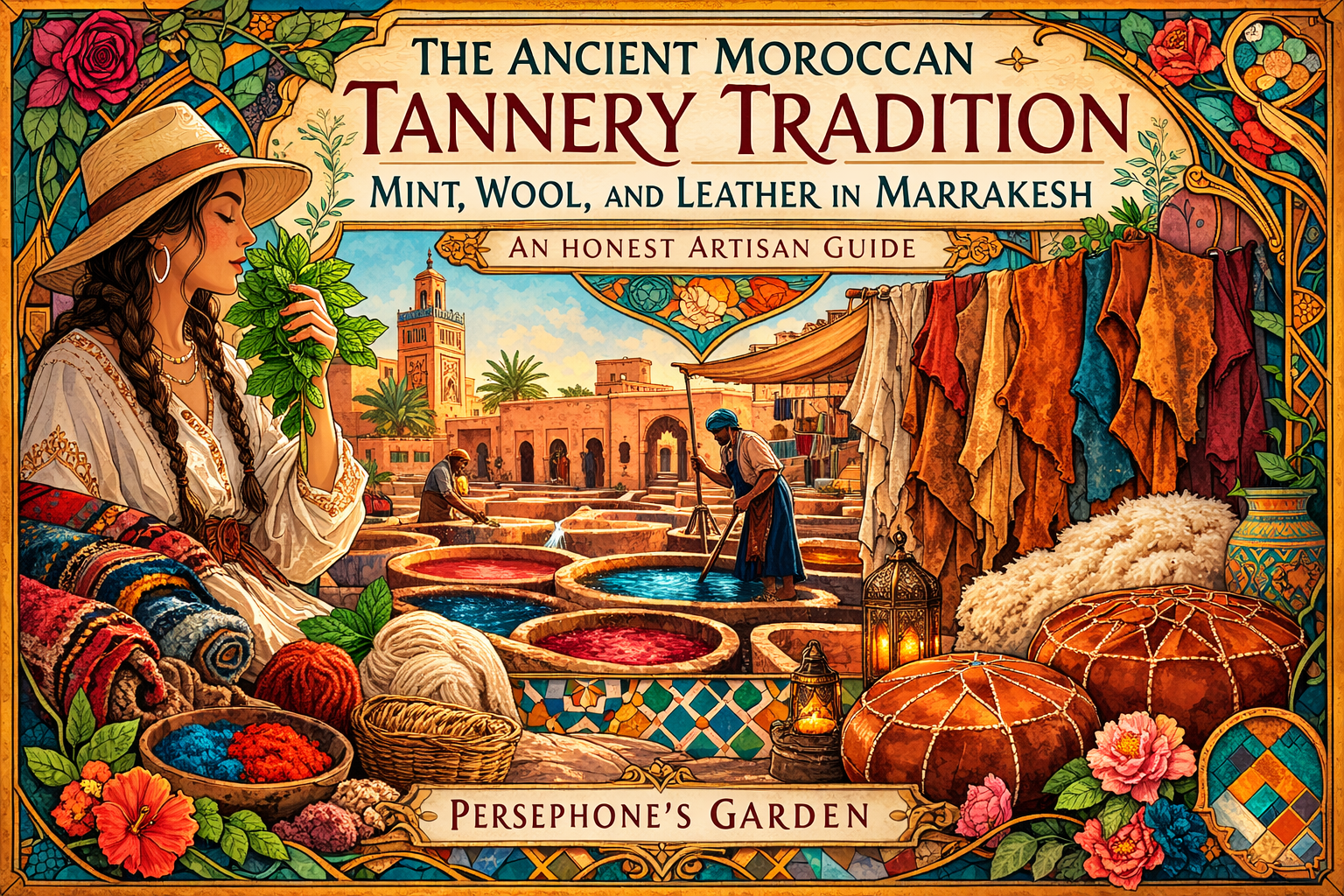
The Ancient Moroccan Tannery Tradition
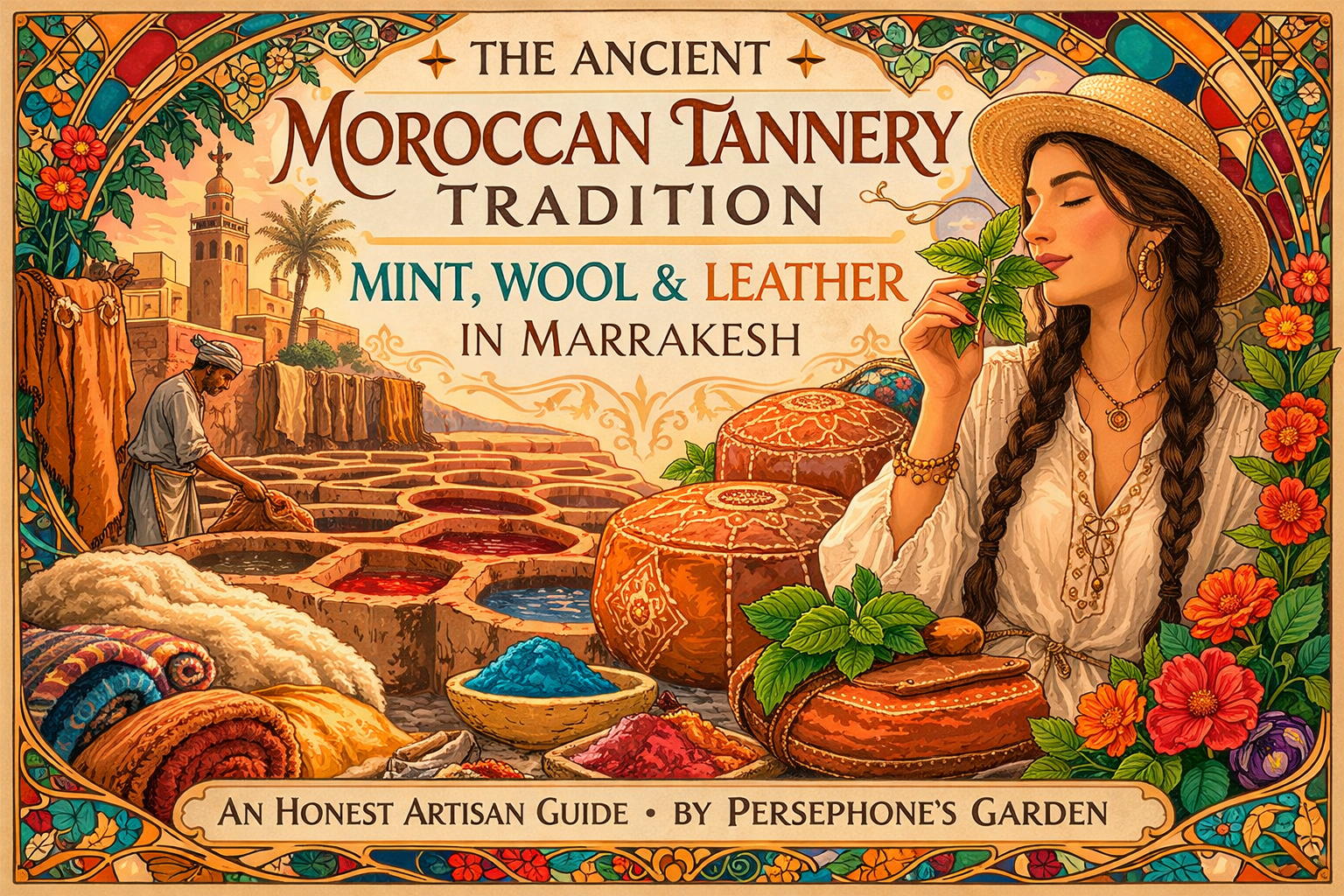
I wasn’t planning on visiting a tannery that day.
I was walking through the winding streets of Marrakesh when a man named Abdul began explaining Morocco’s traditional leather making process. One thing led to another, and before I quite knew what was happening, he handed me a fresh bundle of mint leaves.
“You’ll want this,” he said.
I didn’t fully understand why until we arrived.
The First Breath: Inside a Traditional Moroccan Tannery
If you’ve ever owned a real goat hide rug, the kind that still carries the memory of the animal, you know the scent. Earthy. Organic. Alive.
Multiply that by dozens of hides in transformation under the Moroccan sun.
The mint helped. Abdul was thoughtful. And while the smell was intense, it wasn’t unbearable, just honest. For someone unfamiliar with traditional tanning, it can be shocking. But once your senses adjust, something else emerges: respect.
This is what leather smells like before factories sanitize it.
How Traditional Moroccan Leather Is Made
The ancient tanning process still used in Marrakesh relies on:
Limestone
Salt
Natural vegetable dyes
Pigeon droppings
Yes, pigeon droppings.
They contain ammonia, which naturally softens the hides and helps break down remaining tissue after curing. It is biological chemistry, knowledge refined long before industrial tanning methods existed.
No imported chemical drums.
No chrome heavy industrial vats.
No synthetic accelerants.
Just sun, fermentation, time, and human hands.
It functions as a largely localized system, materials sourced nearby and processes preserved over centuries. Compared to modern chrome tanning, which can be environmentally damaging, this method feels restrained and cyclical.
Ancient does not mean primitive.
Sometimes it means refined.
Wool and Leather in Berber Tradition
Abdul explained that historically within Berber communities:
Women tended to work more with wool, spinning, weaving rugs, preparing fibers.
Men tended to work more with leather, handling the physically heavier tanning process.
This is tradition, not prescription.
Men and women should, of course, pursue whatever craft calls to them. But understanding how labor evolved within a culture helps us appreciate how knowledge systems were preserved across generations.
And the wool was unbelievably soft.
Cloud like. Warm. Alive in your hands.
The artisans create stunning rugs and leather poufs by sewing together carefully cut leather panels, often painted with geometric ancestral symbols. The poufs are then filled, traditionally with natural fibers or recycled textiles, becoming the iconic Moroccan floor cushions seen around the world.
But in the tannery, they do not look trendy.
They look like artifacts from a living civilization.
Authentic, because they are.
A Note on the Center Artesanal Medina: Honest Travel Advisory
For transparency, this visit took place at the Center Artesanal Medina in Marrakesh, which currently holds a low rating on Google reviews, around 1.3 out of 5 stars at the time of writing.
Many reviews mention aggressive sales tactics.
So let us address it clearly.
Yes, there is pressure to buy.
Yes, you are guided through the tannery with the assumption you will tip.
Yes, prices can be significantly marked up for tourists.
If you are uncomfortable with high pressure sales environments, go in prepared or choose a different tannery experience.
Tipping is culturally expected if you are shown around the dye pits. Decide beforehand what you are comfortable spending. Set boundaries politely and clearly.
Now the nuance.
The craftsmanship is real.
The tanning process is authentic.
The wool is genuinely high quality.
The leatherwork reflects generational skill.
These are not staged actors for tourists. These are working artisans operating within a trade that has likely existed for centuries, possibly passed down across dozens of generations.
Tourism has shaped the delivery.
The knowledge itself remains intact.
My balanced advice:
Go informed.
Respect the labor.
Support if aligned.
Decline politely if not.
Do not dismiss the entire tradition because the sales energy feels intense.
Why Preserving Artisan Knowledge Matters
We live in a world saturated with:
Synthetic fabrics
Petroleum based dyes
Industrial mass production
Chemical heavy processing
Standing in that tannery felt like stepping into a slower rhythm of humanity.
Does that mean we abandon modernity? No.
But there is a middle path.
Ancient systems teach:
Material literacy
Closed loop thinking
Local sourcing
Durability over disposability
When everything feels industrialized and disconnected, witnessing a craft that transforms raw hide into supple leather using sun, earth, and time is grounding.
Supporting artisans is not nostalgia.
It is preserving intelligence.
Persephone’s Garden exists to protect that kind of knowledge, not to romanticize it blindly, but to engage with it honestly and thoughtfully.
Sometimes that means holding beauty and complexity at the same time.
And sometimes it means pressing mint leaves gently to your nose in the Moroccan sun and letting yourself learn.
✧ Travel Tips for Visiting a Moroccan Tannery
Bring small cash for tipping.
Set your budget before entering.
Do not feel obligated to buy if you are uncomfortable.
Ask questions about materials and dyes. Many artisans are proud to explain.
If purchasing rugs or leather goods, negotiate respectfully.
Wear shoes you do not mind getting dusty.